GEOTECHNICAL ENGINEERING
NEWBRIDGE

Geotechnical Engineering in Newbridge

Knowledgeable. Thorough. Resourceful.

LEARN MORE

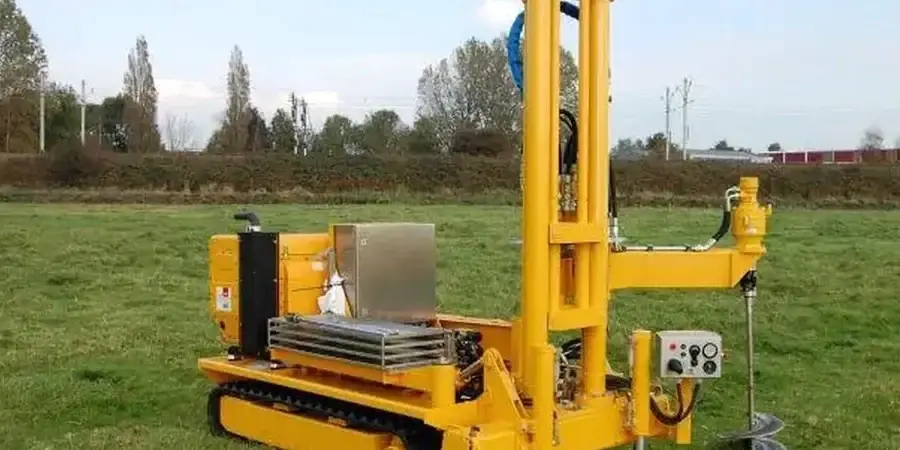
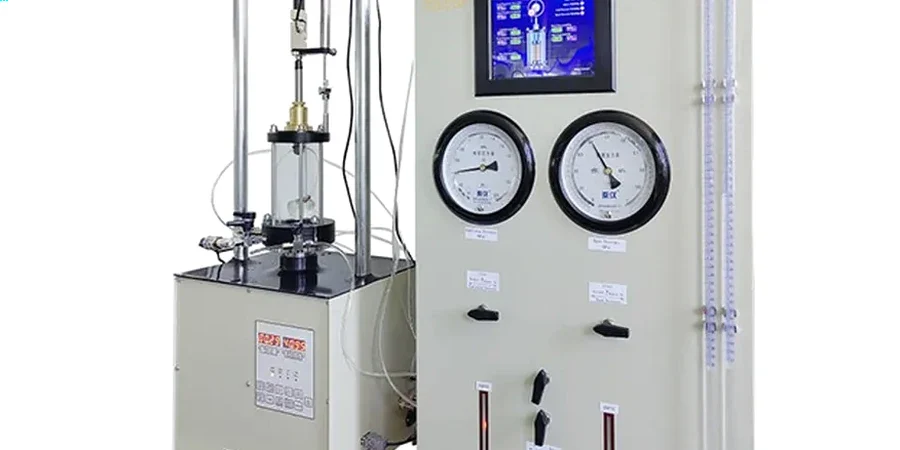
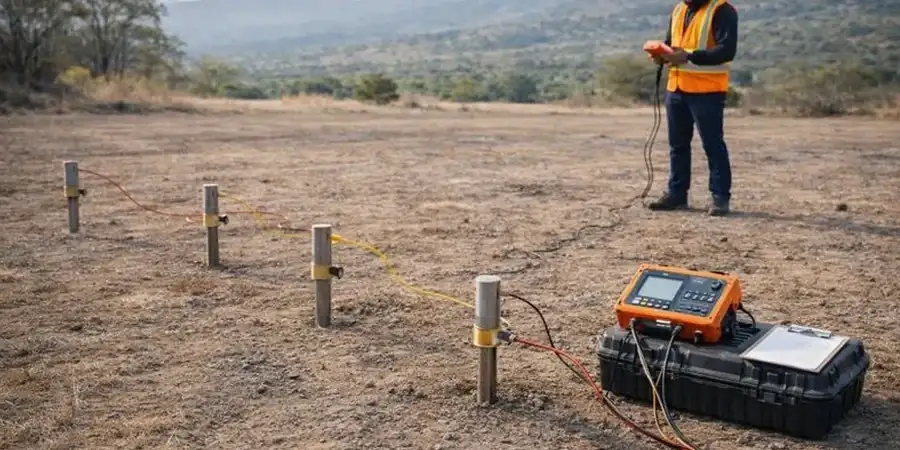
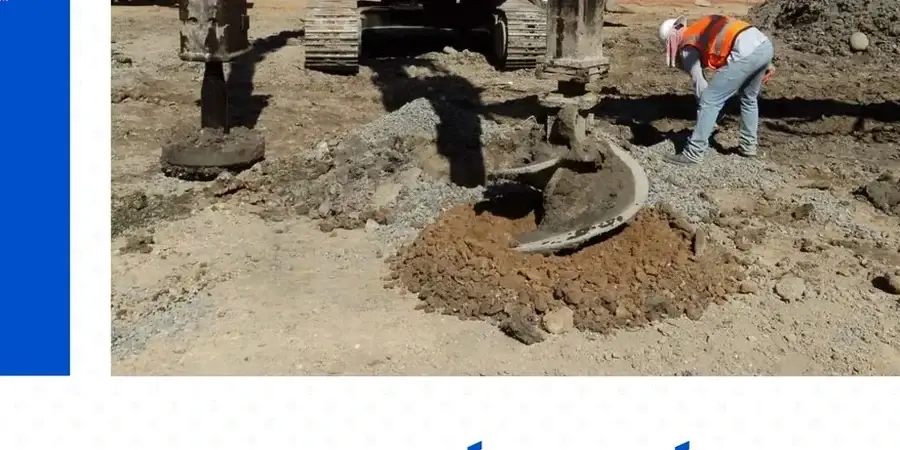
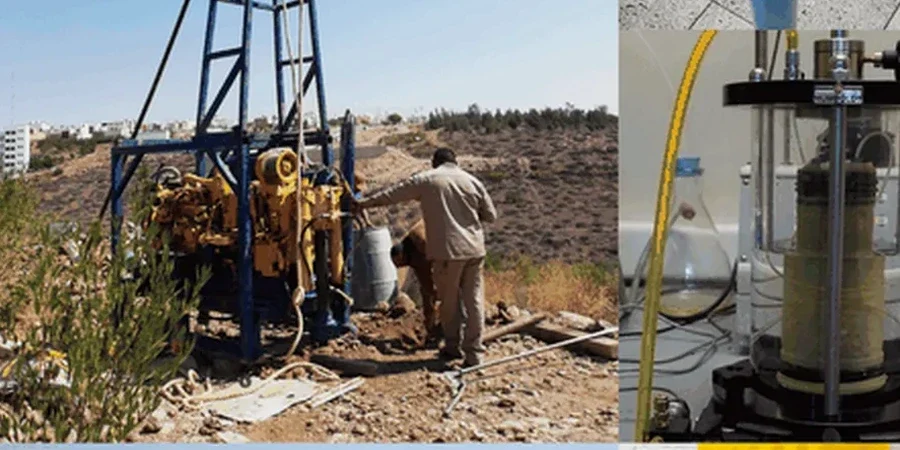
A recent residential development off the R445 near Newbridge encountered a layer of dense, overconsolidated glacial till at just 1.8 metres depth — a profile that standard site investigation methods often misinterpret if they rely solely on penetration resistance. The developer had already commissioned a CPT test to map the soft alluvial cap, but the abrupt transition to lodgement till required a full soil mechanics study to determine undrained shear strength and consolidation parameters before foundation design could proceed. In Newbridge, where the River Liffey and its tributaries have deposited variable sequences of alluvium over the underlying limestone till, understanding the stress history and mechanical behaviour of each stratum is not optional — it is the difference between an optimised footing and a long-term settlement problem. Our laboratory in County Kildare processes undisturbed samples from rotary cores and block sampling, applying triaxial and oedometer testing to deliver the stiffness and strength parameters that structural engineers need for finite element modelling and limit state design.

Glacial till in Newbridge exhibits preconsolidation pressures that often exceed current overburden by 200–400 kPa — ignoring this history leads to overdesigned footings and unnecessary cost.
Geotechnical Engineering in Newbridge
Technical reference — Newbridge

Our service areas

Local geology

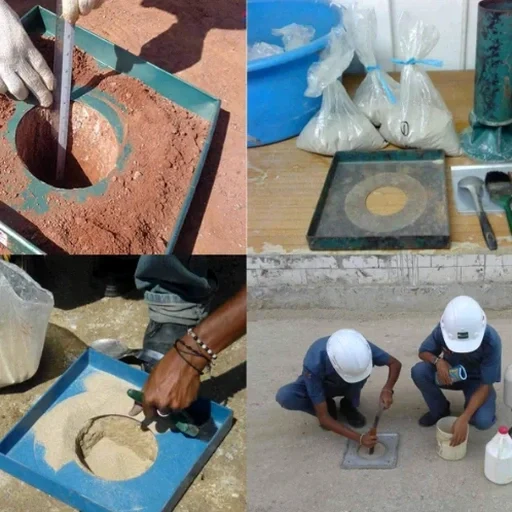
The temperate maritime climate of Newbridge, with annual rainfall approaching 800 mm concentrated in autumn and winter months, dictates a careful approach to sampling and testing. Seasonal groundwater fluctuations of up to 1.5 metres are common in the alluvial gravels that underlie much of the town centre, and these variations directly influence effective stress and, consequently, the drained shear strength parameters we derive in the laboratory. Our soil mechanics study integrates field density measurements using the sand cone method on compacted fill beneath industrial slabs, alongside consolidated-undrained triaxial tests with pore pressure measurement on undisturbed Shelby tube samples. For low-rise structures on the boulder clay that outcrops west of the Curragh, we routinely run Atterberg limits and particle size distribution analyses to classify the material according to the IS EN ISO 14688 framework, ensuring that the derived friction angle and cohesion intercept reflect the in-situ moisture regime. The presence of limestone fragments within the till matrix introduces a degree of interlocking that standard correlations often overlook, and our reporting explicitly addresses this local geological nuance so that bearing capacity calculations do not become overly conservative.

Applicable standards

IS EN 1997-1:2004 + Irish National Annex (Eurocode 7: Geotechnical design), IS EN ISO 14688-1:2018 (Identification and classification of soil), IS EN ISO 17892 series (Laboratory testing of soil — triaxial, oedometer, shear), SR 30:2013 (Irish standard for ground investigation), NRA HD 22/08 (Earthworks and drainage for national roads)

Need a geotechnical assessment?

Reply within 24h.

Email: contact@geotechnical-engineering.co

Why choose us

In Newbridge, we frequently see foundation designs that treat the glacial till as a homogeneous material, when in reality the presence of sand and gravel lenses within the till matrix creates preferential drainage paths that accelerate consolidation settlements under load. A soil mechanics study that omits oedometer testing on samples taken specifically from the clay-rich portions of the till risks underestimating the time rate of settlement by a factor of two or more — a discrepancy that becomes critical when adjacent structures are sensitive to differential movement. Another recurring issue involves the weathered upper zone of the till, which can lose significant strength upon remoulding during excavation, particularly after heavy rain. Without triaxial testing that replicates the anticipated stress path during construction, the designer may adopt a drained strength envelope that is unconservative for short-term conditions. The Irish National Annex to Eurocode 7 (IS EN 1997-1:2004) requires a minimum of three boreholes for structures on glacial soils, and our reports include a statistical treatment of the derived parameters so that characteristic values reflect the true spatial variability.

Technical data

ParameterTypical value
Undrained shear strength (cu) of lodgement till80–250 kPa at 2–6 m depth
Effective friction angle (φ') of dense gravelly till34°–38°
Coefficient of volume compressibility (mv) of alluvium0.05–0.20 m²/MN
Preconsolidation pressure (pc') in overconsolidated till200–600 kPa
Permeability (k) of sandy gravel lenses5×10⁻⁴ to 1×10⁻² m/s
Plasticity index (PI) of weathered till8–22%
Standard Proctor maximum dry density (fill)1.92–2.08 Mg/m³

Common questions

What is the typical timeline for a soil mechanics study on a site in Newbridge?

For a standard residential or light commercial site in Newbridge, the fieldwork — including borehole drilling and sampling — usually takes one to two days, depending on access and the number of investigation points. The laboratory programme, which typically comprises triaxial, oedometer, and classification tests, runs for approximately three to four weeks due to the consolidation stages inherent in triaxial testing. The interpretive report follows within one additional week, so the full process from mobilisation to final report delivery is generally four to five weeks.

How much does a soil mechanics study cost for a single dwelling site in Newbridge?

For a single-dwelling development on a standard site in the Newbridge area, the cost of a soil mechanics study — including site investigation, laboratory testing, and the geotechnical report — typically falls within the range of €2,550 to €4,260. The final figure depends on the number of boreholes required, the depth of the glacial till and the specific laboratory tests needed to characterise the ground conditions.

Which laboratory tests are mandatory under Irish regulations for foundation design?

The Irish National Annex to Eurocode 7 (IS EN 1997-1:2004) does not prescribe a fixed list of tests but requires that the ground investigation be sufficient to establish the geotechnical model reliably. For the glacial till and alluvial soils common in Newbridge, this usually means a combination of triaxial compression tests to determine shear strength parameters, oedometer tests for compressibility, and classification tests (particle size distribution and Atterberg limits) to confirm the soil description. The exact suite is tailored to the proposed structure and the complexity of the ground conditions.

Location and service area

We serve projects in Newbridge and surrounding areas.

View larger map