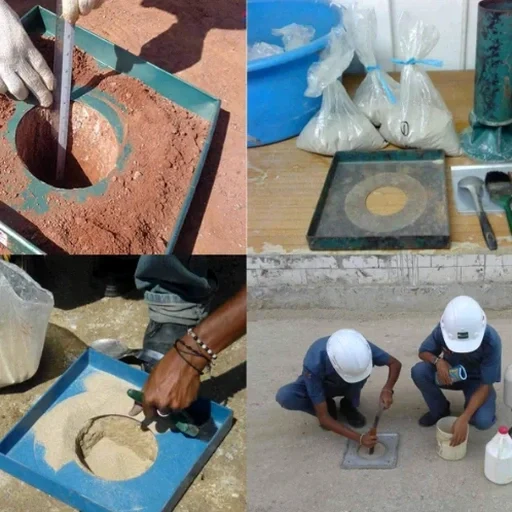
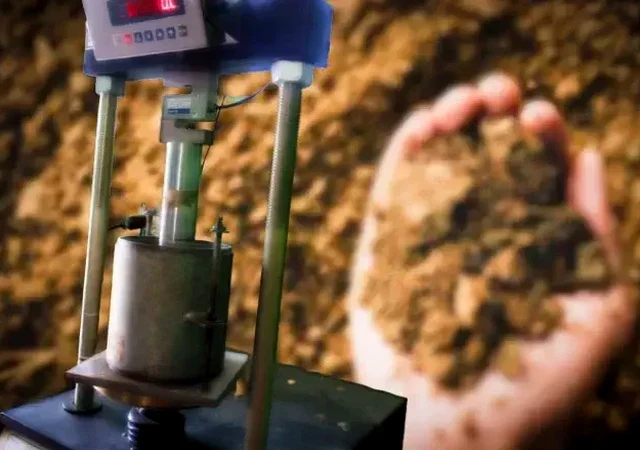
A contractor rang us last Tuesday afternoon about a stretch of new access road off the R445 near the Curragh for a logistics shed. The resident engineer wasn't satisfied with the field density readings on the capping layer and wanted a soaked CBR value by Thursday morning. We see this pattern every season in Newbridge—gravelly glacial tills that compact well on paper but soften noticeably after 96 hours of soaking in the mould. Our laboratory on the Naas road handles the full cycle: sample receipt, moisture conditioning to I.S. EN 13286-47, surcharge ring assembly, and plunger penetration at 1.27 mm/min. When the CBR at 2.5 mm penetration falls below 15% on a capping, it usually means the grading envelope is too wide and fines are migrating. We cross-check with a grain-size analysis from the same sample to confirm the particle distribution and pinpoint the fraction causing the swell.
A CBR test without the full moisture-density curve is just a number—we need the compaction curve to know if the soil was placed at 95% of MDD before the plunger ever touches it.