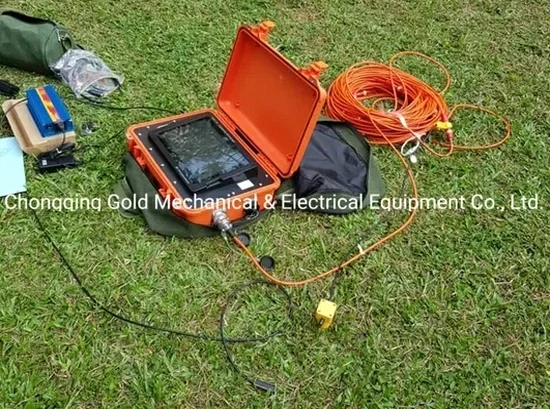
We have seen ground investigations in Newbridge stall because a desk study suggested uniform limestone bedrock, only for the excavation to hit a buried solution channel full of soft clay ten metres deep. That is a costly stop-start scenario. Seismic tomography — both refraction and reflection — removes the guesswork by imaging subsurface velocity contrasts before a machine bucket touches the ground. In a town built over Waulsortian limestone with a history of karstification, the difference between a competent rockhead and a collapsed doline can be just a few metres laterally. We use high-resolution seismic tomography to map that boundary, define rippability zones, and confirm rock mass quality for foundation design. The small additional upfront cost saves tens of thousands in redesign when the geology of the Liffey basin surprises you. For projects where bedrock depth exceeds 15 metres, we recommend combining the seismic survey with a targeted CPT programme to calibrate the overburden stratigraphy with a continuous mechanical log.
A velocity inversion in the seismic profile over Newbridge limestone is not a minor anomaly — it is often a dissolution feature that will dictate your foundation strategy.