GEOTECHNICAL ENGINEERING
NEWBRIDGE
HomeRoadwayFlexible pavement design

Flexible Pavement Design for Newbridge Soil Conditions

Knowledgeable. Thorough. Resourceful.

LEARN MORE

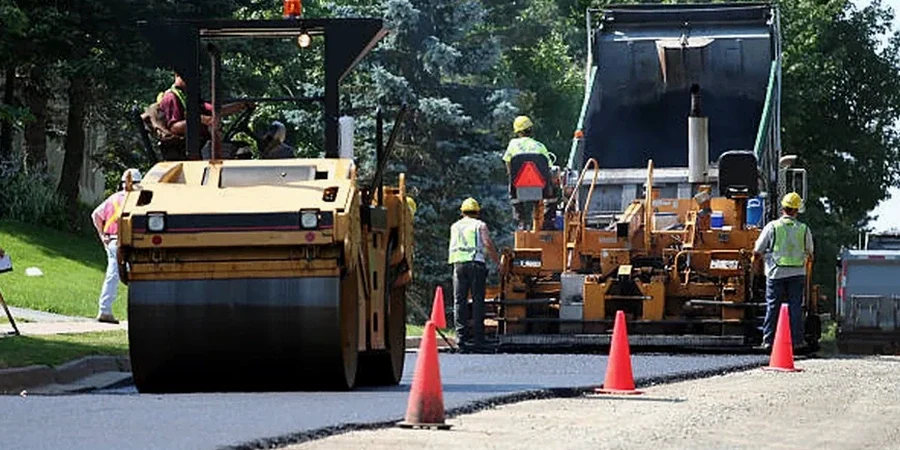
Drive from the well-drained gravels near Newbridge Silverware toward the Liffey floodplain by the train station and you will feel the difference beneath the wheels: one stretch rides firm for decades, the other develops alligator cracking within five years. The subgrade tells the story. Newbridge sits on a patchwork of limestone-derived glacial tills, outwash sands, and pockets of soft alluvial clay that make uniform pavement design a gamble. A flexible pavement engineered for the specific formation level—with the right capping layer, base thickness, and bituminous surfacing—absorbs traffic loads without transferring distress upward. We base every flexible pavement design on intrusive ground investigation and laboratory characterisation, not on desktop assumptions. When the subgrade varies, we layer the structural response accordingly, often specifying a CBR-based road section for low-volume access and switching to mechanistic-empirical analysis for industrial yards where fatigue life matters more than initial cost.

A pavement section is only as reliable as the subgrade investigation that supports it—skip the borehole and you engineer a guess, not a road.
Our service areas

How we work

Newbridge recorded a population increase of over 25 percent between 2016 and 2022, and that growth has pushed housing and link roads onto marginal ground once left as pasture. At 53 degrees north latitude, the town endures wet winters and frequent freeze–thaw cycles that degrade poorly drained formation layers. A flexible pavement design responds to those conditions through graded aggregate bases, geotextile separation on silty subgrades, and binder courses tuned to site-specific traffic spectra. The structural number is calculated from layer coefficients validated by grain-size analysis and Atterberg limits run in our ISO 17025-accredited laboratory, ensuring the design matches the material actually placed. We specify DBM and AC binders per the TII Series 900 and verify stiffness with indirect tensile testing. Where the water table rises within 600 mm of the capping, we add a drainage blanket or raise the profile, because saturation cuts the resilient modulus by half in the local silty till.
Flexible Pavement Design for Newbridge Soil Conditions
Technical reference — Newbridge

Local considerations

The glacial till across much of Newbridge is stony and stiff at the surface but often conceals a lens of compressible lacustrine clay or a perched water table less than a metre down. When that lens is missed, the pavement flexes beyond its fatigue endurance and reflective cracking migrates to the surface in two seasons. Another risk is frost heave in silt-rich subgrades: the Irish climate pushes the freezing front deep enough to segregate ice lenses unless the capping is properly drained and non-frost-susceptible material extends below the design frost depth. We map these hazards with dynamic probing and trial pits before a single layer is specified. On brownfield sites, buried services and old fill add another layer of uncertainty—our designs incorporate a stiff geogrid at the subbase interface when differential settlement is expected. At the junction between the M7 overbridge and local distributor roads, even a 15 mm differential can trigger edge break, so we detail the tie-in with extra attention to compaction and bond coat continuity.

Need a geotechnical assessment?

Reply within 24h.

Email: contact@geotechnical-engineering.co

Applicable standards

TII Publication DN-PAV-03046 (Pavement Design and Road Construction), I.S. EN 13285:2018 (Unbound mixtures – Specification), I.S. EN 13108-1:2016 (Bituminous mixtures – Asphalt Concrete), I.S. EN 13249:2016 (Geotextiles in road construction), TII Specification for Road Works Series 900 (Road Pavements – Bituminous Materials)

Technical data

ParameterTypical value
Design traffic (msa)1–30 (light access to heavy industrial)
Capping layer CBR requirement≥15% after compaction
Subgrade CBR classificationVery poor (<2%) to good (>10%)
Bituminous layers thickness120–350 mm (binder + surface course)
Granular base Type A / B200–350 mm, unbound, per TII Clause 804
Geotextile separation classClass 2 or 3 per I.S. EN 13249
Design life (flexible)20–40 years, traffic-dependent

Common questions

How much does a flexible pavement design cost for a typical Newbridge access road?

For a private access road or small industrial yard in the Newbridge area, the combined geotechnical investigation and pavement design package generally ranges from €1,330 to €4,460. The spread depends on the number of trial pits or boreholes, the extent of laboratory testing, and whether a drainage assessment is required. A short cul-de-sac on competent gravel costs less; a haul road crossing soft alluvium with a high water table costs more because we need deeper investigation and more laboratory cycles to validate the capping solution.

What is the difference between a flexible and a rigid pavement in Irish conditions?

A flexible pavement distributes traffic loads through a layered system of bituminous materials and unbound granular stone, so the stress reduces gradually with depth before reaching the subgrade. A rigid pavement relies on the flexural strength of a concrete slab. In Ireland, flexible pavements are preferred for most county roads because they tolerate minor differential settlement better, are easier to patch after utility cuts, and cost less to construct initially—though they require more frequent resurfacing over a 40-year life.

Which laboratory tests do you run to verify the pavement materials?

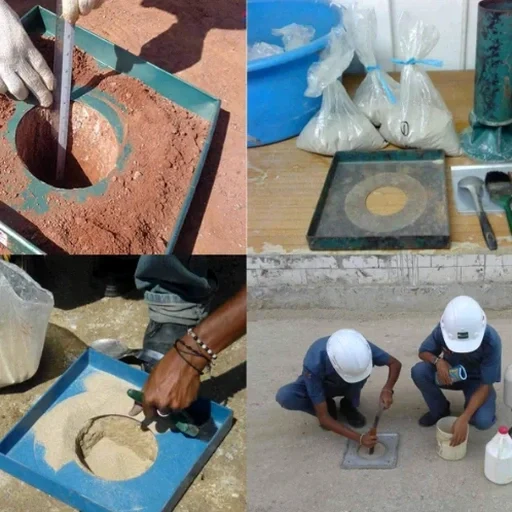
We run the full suite required by TII Series 900: particle size distribution (sieving and sedimentation), Atterberg limits, moisture–density relationship, CBR at the expected in-service moisture condition, flakiness index, Los Angeles abrasion, and magnesium sulfate soundness. For bituminous mixes we add binder content, grading of recovered aggregate, and indirect tensile stiffness modulus. All tests are performed under our ISO 17025 scope, so the results are directly admissible for TII and local authority submissions.

Can you design a flexible pavement for a site with a high water table near the River Liffey?

Yes, and we do it regularly for developments along the Liffey corridor near Newbridge. The key is a solid capping layer placed on a separation geotextile, with a drainage blanket or fin drains to lower the phreatic surface below the formation. We specify the capping thickness and grading so the layer remains stable during construction trafficking, even when partially saturated. The pavement section above is then analysed with a reduced subgrade modulus that reflects the worst-case spring condition.

Location and service area

We serve projects in Newbridge and surrounding areas.

View larger map