GEOTECHNICAL ENGINEERING
NEWBRIDGE
HomeInvestigationExploratory test pit

Exploratory Test Pits Across Newbridge: Reading What the Ground Won’t Tell You

Knowledgeable. Thorough. Resourceful.

LEARN MORE

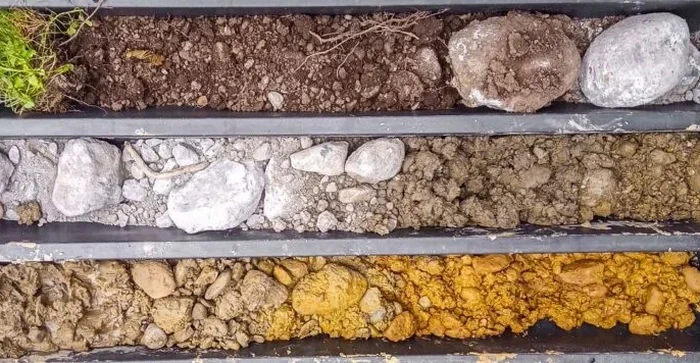
At 104 metres above ordnance datum, Newbridge sits on a subtle ridge above the River Liffey, underlain by Carboniferous limestone mantled with glacial till deposited during the Midlandian glaciation. Every site here has a story, and we’ve seen too many projects stall because someone assumed uniform ground conditions across a 0.2-hectare plot. An exploratory test pit cuts through the guesswork. In the past twelve months alone, our team has opened over sixty pits across the town, from the Curragh side to the expanding residential estates near the train station. What we find is rarely textbook: pockets of laminated clay, perched water tables at 1.8 metres, and occasional chert bands that throw off machine operators. A properly logged exploratory test pit, combined with targeted in-situ permeability testing, gives you the stratigraphic truth before a single drawing leaves the engineer’s desk.

You don’t design a foundation on the Curragh gravels the same way you would on the laminated clay pockets we keep finding west of the Liffey crossing.
Our service areas

How we work

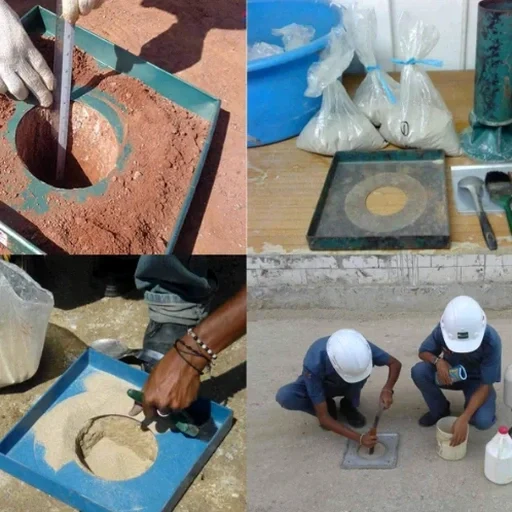
Newbridge owes much of its modern footprint to the cavalry barracks established in the early 19th century, which spurred development on terrain that had been open grazing land for centuries. That history matters when you’re excavating today. Fill material from eighteenth-century construction is surprisingly common—we’ve encountered brick rubble and limestone chippings at depths of 1.5 metres within a hundred metres of the town centre. Every exploratory test pit we excavate follows EN 1997-2 (Eurocode 7, Part 2) sampling protocols, meaning we log strata, photograph the face, and collect representative disturbed and undisturbed samples. In cohesive layers we run hand shear vane tests directly on the pit floor. When we suspect variability in bearing capacity, we pair the pit observations with a plate load test to correlate visual evidence with deformation moduli. For road drainage design near the M7 corridor, we often combine pit logs with sand cone density measurements on compacted fill, ensuring the contractor hasn’t left loose lifts buried under the finished grade.
Exploratory Test Pits Across Newbridge: Reading What the Ground Won’t Tell You
Technical reference — Newbridge

Local considerations

Around Newbridge, the biggest trap we see is contractors treating the upper 600 millimetres of weathered limestone till as competent bearing material. It’s not. That crust can sit over soft, moisture-sensitive silt lenses that lose all strength when the autumn rains arrive. An exploratory test pit that stops at a metre misses the critical transition zone. Another problem is old farm drainage. Several sites east of the railway line still have clay tile drains laid in the 1940s—undetectable from surface surveys but obvious when the pit wall collapses in a straight line. If you skip this investigation, you’re betting the foundation on what’s essentially a drainage channel. The information we pull from a single exploratory test pit often reshapes the entire foundation strategy, saving tens of thousands in remedial work later.

Need a geotechnical assessment?

Reply within 24h.

Email: contact@geotechnical-engineering.co

Applicable standards

IS EN 1997-1:2005 (Eurocode 7, Geotechnical design), IS EN 1997-2:2007 (Ground investigation and testing), IS EN ISO 22475-1:2021 (Sampling by excavation), Health and Safety Authority (HSA) Code of Practice for Safety in Excavations

Technical data

ParameterTypical value
Typical excavation depth2.5–4.5 m (machine), deeper with shoring if safe
Standard pit dimensions1.2 m x 2.4 m (width x length) for access and sampling
Sampling standardEN 1997-2:2007, IS EN ISO 22475-1
In-situ tests performedHand shear vane, pocket penetrometer, infiltration ring
Typical logging intervalEvery 0.3 m or at every strata change
Groundwater observationInflow rate noted; standpipe piezometer installed when required
Safety protocolTrench box or battered sides beyond 1.2 m depth per Irish HSA guidelines

Common questions

What depth of exploratory test pit is typical for a two-storey house in Newbridge?

For a standard residential project on the glacial till common around Newbridge, we usually excavate between 2.5 and 3.5 metres. That gets us through the weathered zone and into the competent till or bedrock, which is what a strip footing needs to see. We base the exact depth on the preliminary desk study and the groundwater conditions observed during excavation.

How much does an exploratory test pit investigation cost in the Newbridge area?

The price for a single exploratory test pit in Newbridge, including machine time, logging, sampling, and a factual report, ranges from €420 to €760. The final figure depends on access constraints, target depth, and whether we install a standpipe piezometer. A campaign of three pits on a typical residential plot provides solid coverage without blowing the site investigation budget.

Is a test pit enough to satisfy the Building Control Regulations for a new build?

Often yes, but it depends on the site. A test pit gives you direct visual evidence of the ground profile, which is exactly what the Assigned Certifier needs to see for a foundation design under Technical Guidance Document A. If the pit reveals soft spots or variable ground, we might recommend supplementing it with a CPT test or dynamic probe to fill in the gaps between pits.

Location and service area

We serve projects in Newbridge and surrounding areas.

View larger map