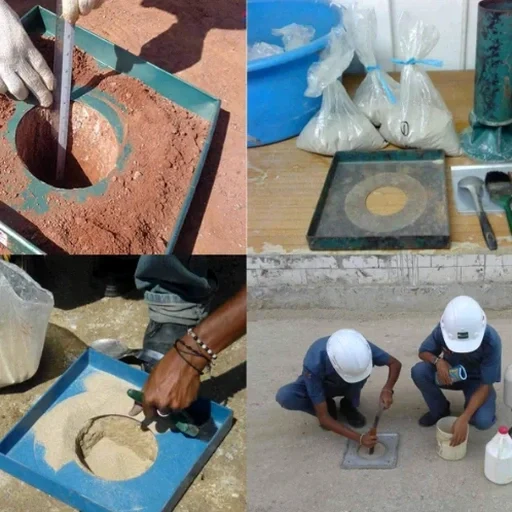
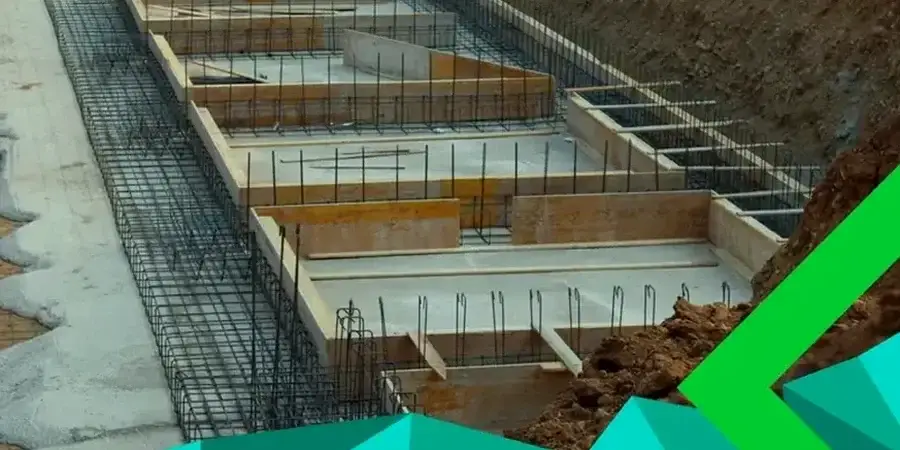
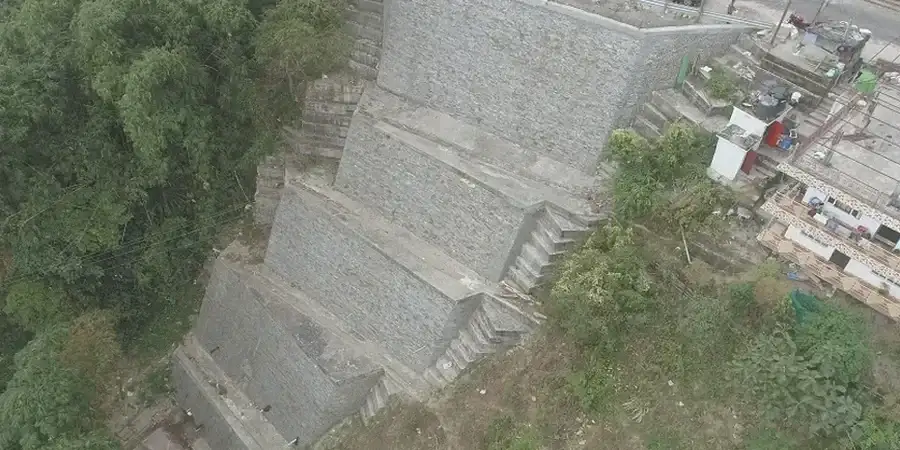
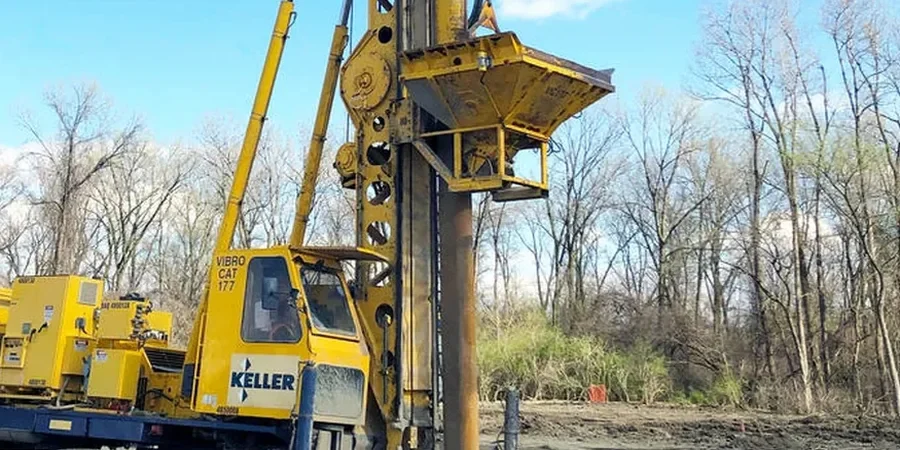
Newbridge’s expansion from a modest military barracks town into a thriving commuter hub for Dublin has placed unprecedented demand on land that was once considered marginal. The River Liffey’s floodplain and the glacial deposits left behind by the Midlandian glaciation create a patchwork of loose alluvial sands and silts that simply cannot support modern structural loads without intervention. When the barracks itself was constructed in the early 19th century, foundation expectations were minimal; today, a data center or multi-story residential block requires a design bearing capacity that natural ground rarely provides. This is where vibrocompaction design becomes the critical first step: we analyze grain-size distribution, relative density targets, and the energy input required to transform these compressible soils into a competent foundation medium. Complementing this with CPT testing allows us to verify the achieved improvement profile with continuous data, ensuring the design assumptions hold true across the entire site.
Effective vibrocompaction design converts loose granular deposits into a dense, settlement-resistant foundation layer—without importing a single cubic meter of aggregate.